 ▷ Research
 Five euploid transfers reach a 96 to 99% live-birth rate
96 to 99.6%live birth after five transfers

A clear guide for women aged 38+, in 2026.
There is almost nothing more important for a woman who is 38 to 40 or older, starting out or continuing IVF, than understanding what a euploid embryo is and the factors that impact your euploidy rate. Why? Because your chance of bringing home your baby after three to five euploid embryo transfers is 93 to 99%, while three aneuploid transfers will deliver you a chance of less than 1%.
This article is built to help you start to understand both.
You will face unique challenges in your IVF journey. And one of the most difficult of these is that by virtue of your age (regardless of how fit and healthy you are), your baseline chances of having a baby are lower. This changes how the system treats you, how your body responds and whether or not you achieve your dream of becoming a parent.
Many doctors and embryologists will convince you that there is nothing you can do to change your euploidy rate. "Nothing" is a strong, absolute term that the researched evidence doesn't support. There are things you can try. They're not guarantees, but they are options worth discussing and this guide is your gateway to understanding them.
I have been where you are and this is the euploidy guide I wish I'd had when I started IVF for the second time at age 39. After two cycles with no useable embryos, I applied the research and evidence rigorously until by my fifth cycle, I had shifted my own euploidy rate from that of an average 43 year old to that of an average 25-30 year old. My first euploid transfer ended in a successful ongoing pregnancy (now my living daughter).
Read on to learn everything you need to know about euploids and what things have been shown to impact embryo quality and live birth rates.
Euploidy is how we refer to an embryo that is euploid: an embryo that has exactly two copies of each of the 23 chromosomes that humans have. No more, and no less on any one of the 23 individual chromosomes.
Unlike every other cell in the body (somatic cells), gametes (female eggs and male sperm cells) hold only half of the genetic code required for life, that is, 23 chromosomes each. Through the process of fertilisation, these 23 chromosomes come together to create 46 in total. In biological terms for humans at least, each of these pairs are called homologous chromosomes, meaning a basic chromosome number of two: one from the biological mother and one from the biological father.
There is no way of knowing whether an embryo that is created in vivo (that is, through the process of sexual intercourse and natural conception) is euploid or not. This is a concept that has only come to be understood through IVF and a process of testing called PGT-A: preimplantation genetic screening for aneuploidy, i.e. abnormal cells contained within an embryo, which allows embryologists to identify euploid embryos and prioritise them for transfer ahead of other options.
A euploid embryo is created when the process of mitosis (where the fertilised oocyte, i.e. the egg, begins to divide) occurs without errors. For this to happen, the spindle within the oocyte which contains the genetic code needs the perfect environment for the cell division process to occur.
For instance, enough energy needs to be being produced by the mitochondria within the oocyte, the spindle itself needs to be nicely aligned, and the motor neurons that physically help to pull on the edges of the spindle in order to split the chromosomes need to be working at their peak.
One mistake, and a chromosome may have more than two copies (trisomy or polysomy), or it may be missing one copy (monosomy). Without balanced genetic material, the risk of miscarriage or birth with genetic disorders increases, while a nice, even division between daughter cells is what creates a euploid embryo. This can sometimes also in medical literature be referred to as diploid, which just means the cells have two complete sets of chromosomes (2n).
Euploidy matters, particularly for women over 37, because your chances of producing a euploid embryo with in vitro fertilisation decrease as your age increases. Age is a primary challenge because the quality and the number of eggs that can make a euploid blastocyst both fall steeply with age, driven by mitotic and meiotic errors during cell division. And a euploid embryo gives you the greatest chance of taking home a live baby.
This process of decreasing chance is gradual. It doesn't immediately happen at 35 or 38. It is a decline that appears to begin from approximately age 33 for women. Unfortunately it is also individual. While the statistical averages tell one story, there are of course many individual cases of younger women who struggle to produce euploid embryos.
Ultimately this is what is meant when people say fertility declines with age. You can still have a period, you can still be capable of getting pregnant, but the likelihood of any pregnancy resulting in a live birth gets lower and lower.
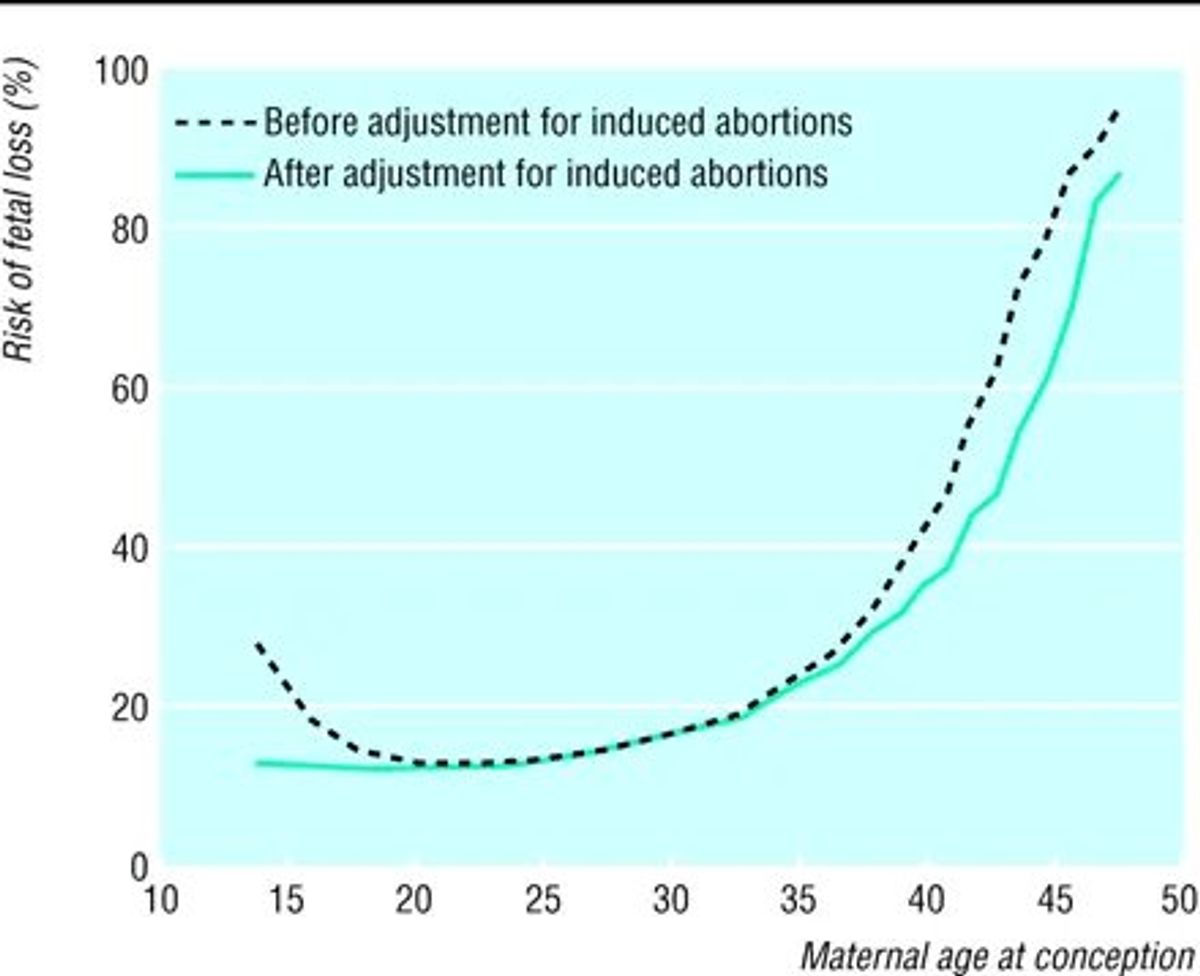
Another way of putting this is that over 37, with a natural pregnancy, the chance of miscarriage keeps increasing. By age 45 to 48, the chance of having a miscarriage even if you do get pregnant is between 80 to 95%.
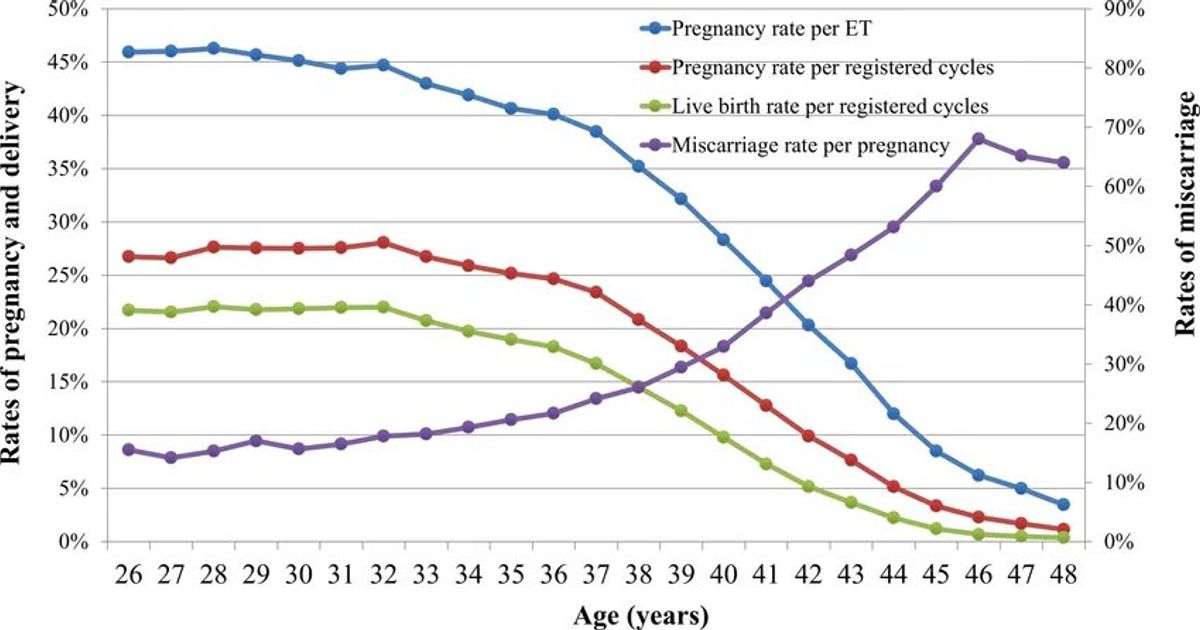
The PGT-A Decoder is most useful here: upload a screenshot of your PGT-A results to see live birth rate stats on embryos like yours.
Open the Decoder →A similar decline in fertility occurs for men from a similar age, and although it is less pronounced, it can significantly impact IVF outcomes for women who are already older.
As your age increases, the probability of producing at least one euploid embryo within any given IVF cycle is reduced by these key things:
Unfortunately as women age, their AMH decreases, as does their antral follicle count. As a result, fewer eggs are collected and therefore fewer embryos can be produced. These impacts of age also affect aneuploidy and euploidy rates: the percentage of total embryos from any given cycle that are found to be euploid upon testing.
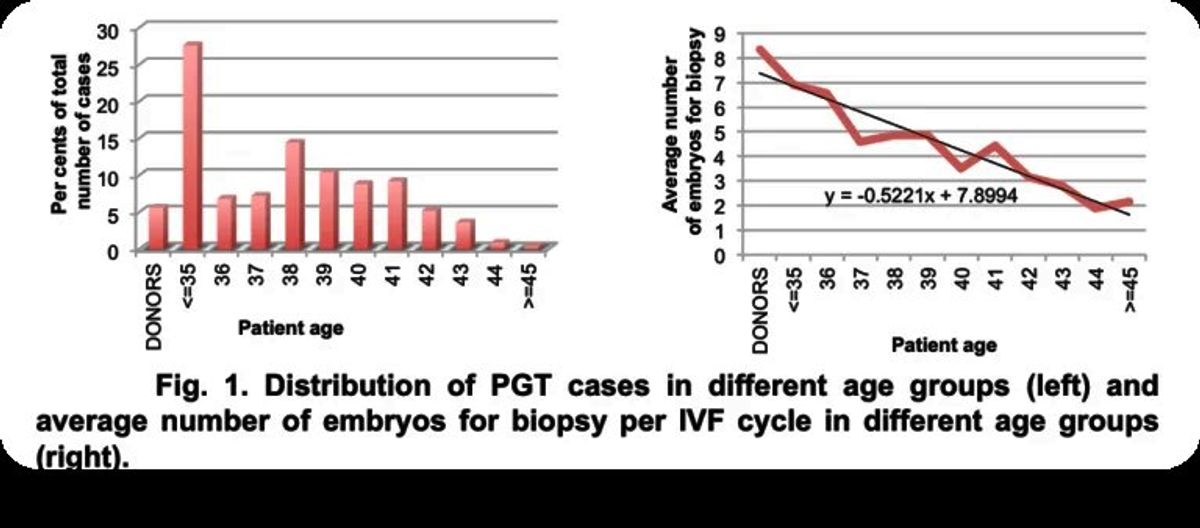
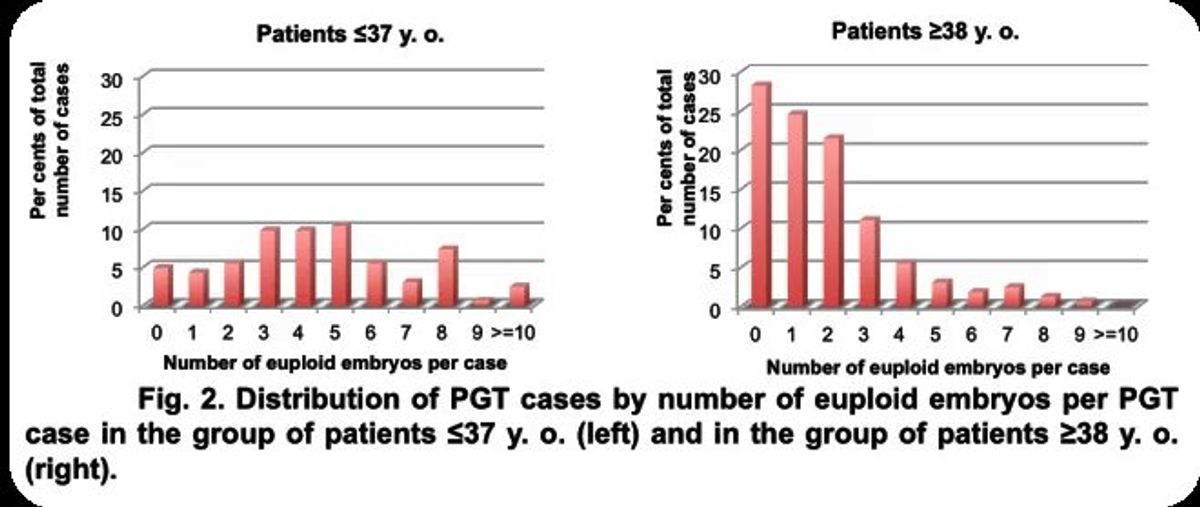
So let's say you're 41 and you produce 1 blastocyst. The likelihood of that embryo being euploid is approximately 30%. Another way of putting it is: you may only get a euploid embryo one in every three cycles, or three of you may be unlucky and get none, while seven other women get one. But let's say you produce 7 embryos. In that case, a 30% chance could mean you end up with 2 euploid embryos despite your age. In essence, your chance of producing a euploid is higher the more embryos you produce, but it is not guaranteed either way.
We read the papers so you don't have to. Sign up and we'll send you each new study, explained clearly, as we release it.
This is unfortunately very common for older women to experience and it's something that gets asked in IVF forums a lot. A single cycle can cost up to $30,000, so the fact that something which costs so much can fail to produce a single high opportunity for a baby is devastating. Many women rightfully want to know: if they didn't produce a euploid within their first cycle, what are the chances of producing one in subsequent cycles?
There has been research that has looked at this. It shows that at 41 to 42, 43% of people who did not get a single euploid in their first cycle will produce one in their second. But over 42 that figure drops to 13%. In short though, your chances effectively remain the same across a second cycle (the same as what is standard for your particular age).
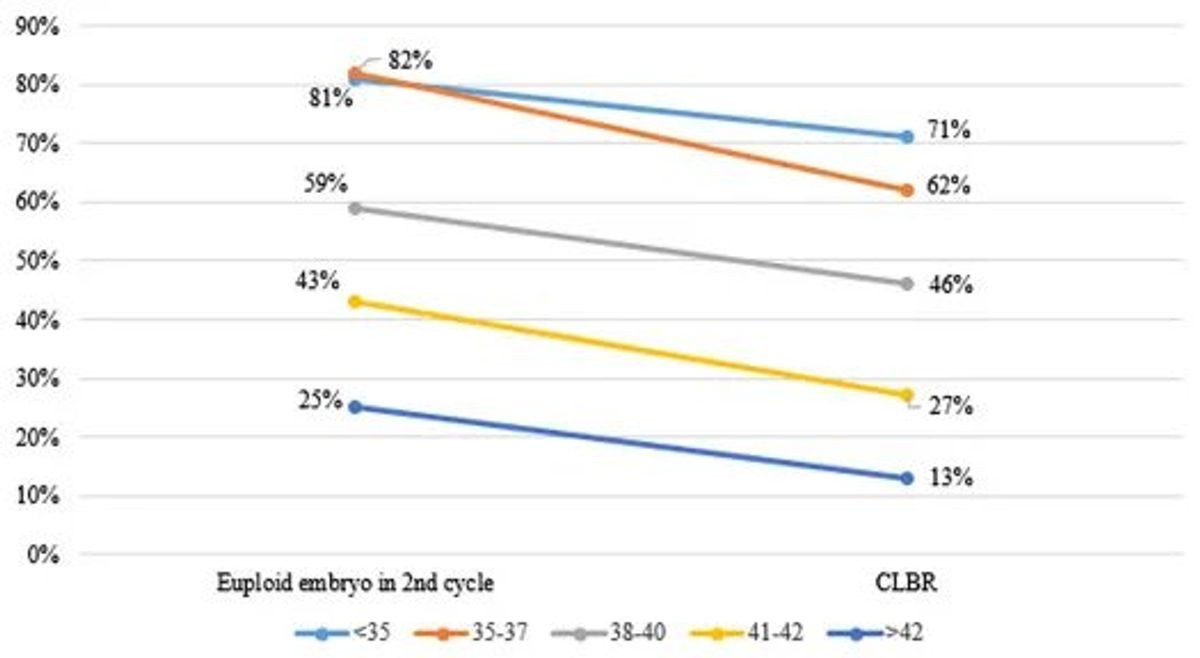
There is a belief within the IVF community for older women on Facebook and Reddit, that it's a numbers game. While this is true to a certain extent, certainly for the first couple of cycles, especially beyond age 42, this is no longer the case.
What the research shows is that there is really a maximum number of cycles in which it makes any sort of logical sense to continue, with the belief that doing so could result in an increased chance of a successful pregnancy:
However if you read the cumulative live birth rates, it tells a rather more sobering story:
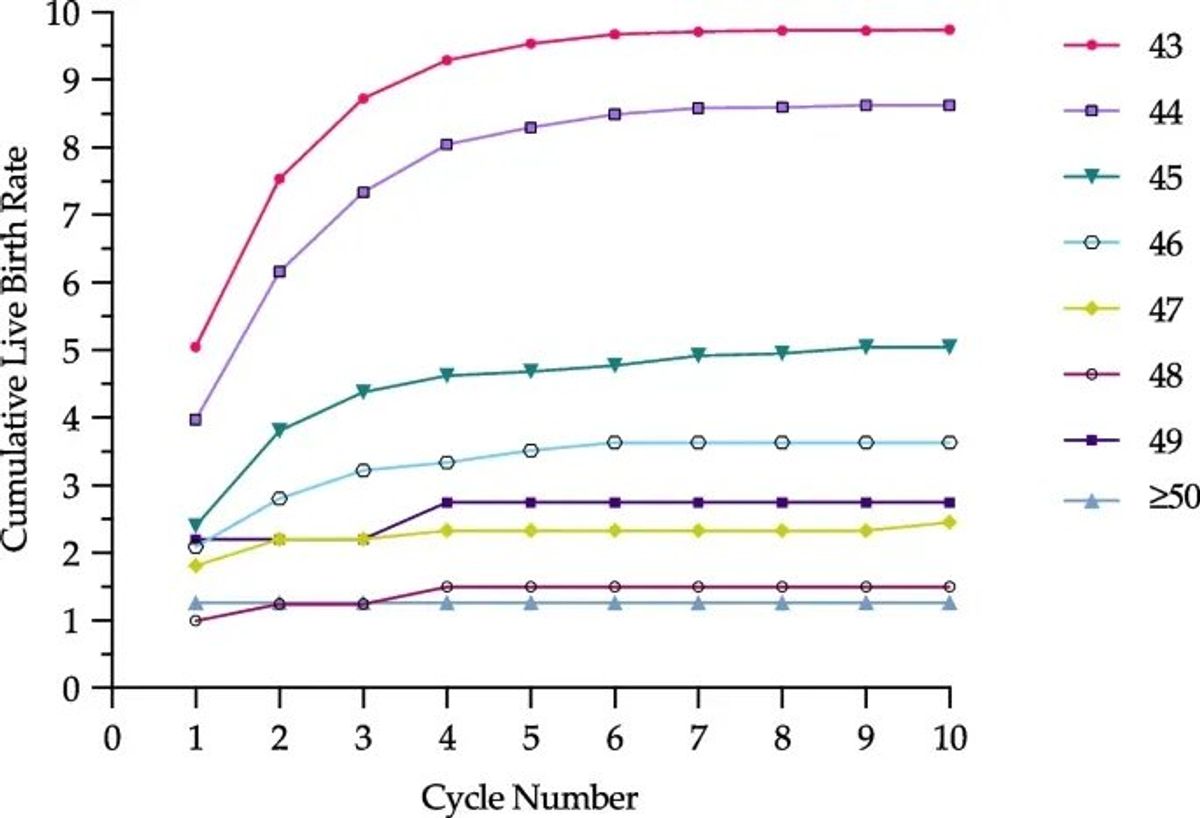
So the answer to this question is: it depends. This research gives you a clue as to how many it may make sense to do (if you can financially afford it), but what no research study is going to do is understand or speak to your personal circumstances.
No, is the simple answer. The longer answer is this:
The thing that older women need to be aware of when reading IVF research in general is:
Once you understand these things, you can begin to read IVF research with a much more critical eye, and one that can pick out new research that relates to you based on your age and anything else that may be unique about your personal situation (some of the ones that are regularly studied separately include: good prognosis patients with high AMH levels or antral follicle counts, DOR (diminished ovarian reserve), PCOS, RIF (recurrent implantation failure), RPL (recurring pregnancy loss) and various sperm related issues.
First, a bit of context. As a result of recent lawsuits filed in the US against testing companies, there has been increasing misinformation circulating within the IVF communities on social media for older women. These can usually be summarised as a strong belief that the testing process is completely incorrect and a strong belief that somehow whole chromosome aneuploid embryos can self-correct. In actuality, while there can be either test errors in the range of 1 to 3%, or differences in concordance rate up to 15% (what the placental cells which are tested say versus what the actual cells that become the baby say), this ultimately does not change the reality of live birth rates for older women).
Where these beliefs lead to people choosing not to test, and therefore to not consider any alternative ways of improving their euploidy rate, it is possible they do themselves a disservice. Younger women are much more likely to experience a scenario where the outer placental cells of the embryo do not accurately reflect the level of mosaicity of the inner cells that form the baby. This may explain why embryos that test as mosaic or aneuploid may go on to give successful transfers. However, the chances of this happening on a whole chromosome aneuploid embryo are higher in younger cohort to the order of 5% as compared to 0-1% in older women.
That being said, euploidy itself is a spectrum. And that spectrum is defined by the laboratory cut-offs which are designated by the big testing companies.
As a reminder, a euploid embryo is an embryo where 20 to 30% (depending on the lab) or less of the placental (trophectoderm) cells from the embryo's outer layer that were tested had missing or additional chromosomes. Each chromosome is diploid, which means it has the exact multiple of 2 x 23 chromosomes: one from the egg and one from the sperm.
The correlation between embryo quality (its morphological qualities, scored using a grading method such as Gardner or Schoolcraft) and the likelihood of an embryo being euploid decreases with age. Having an AA grade embryo still only gives a 43 year old woman a 40% chance that the embryo will be euploid, unlike a 90% chance at age 26, or a little less than 80% at age 30.
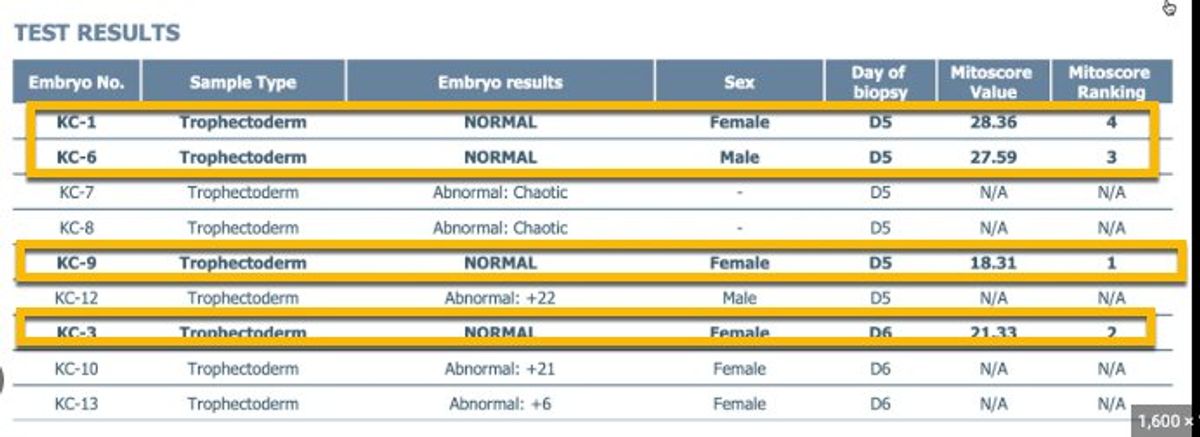
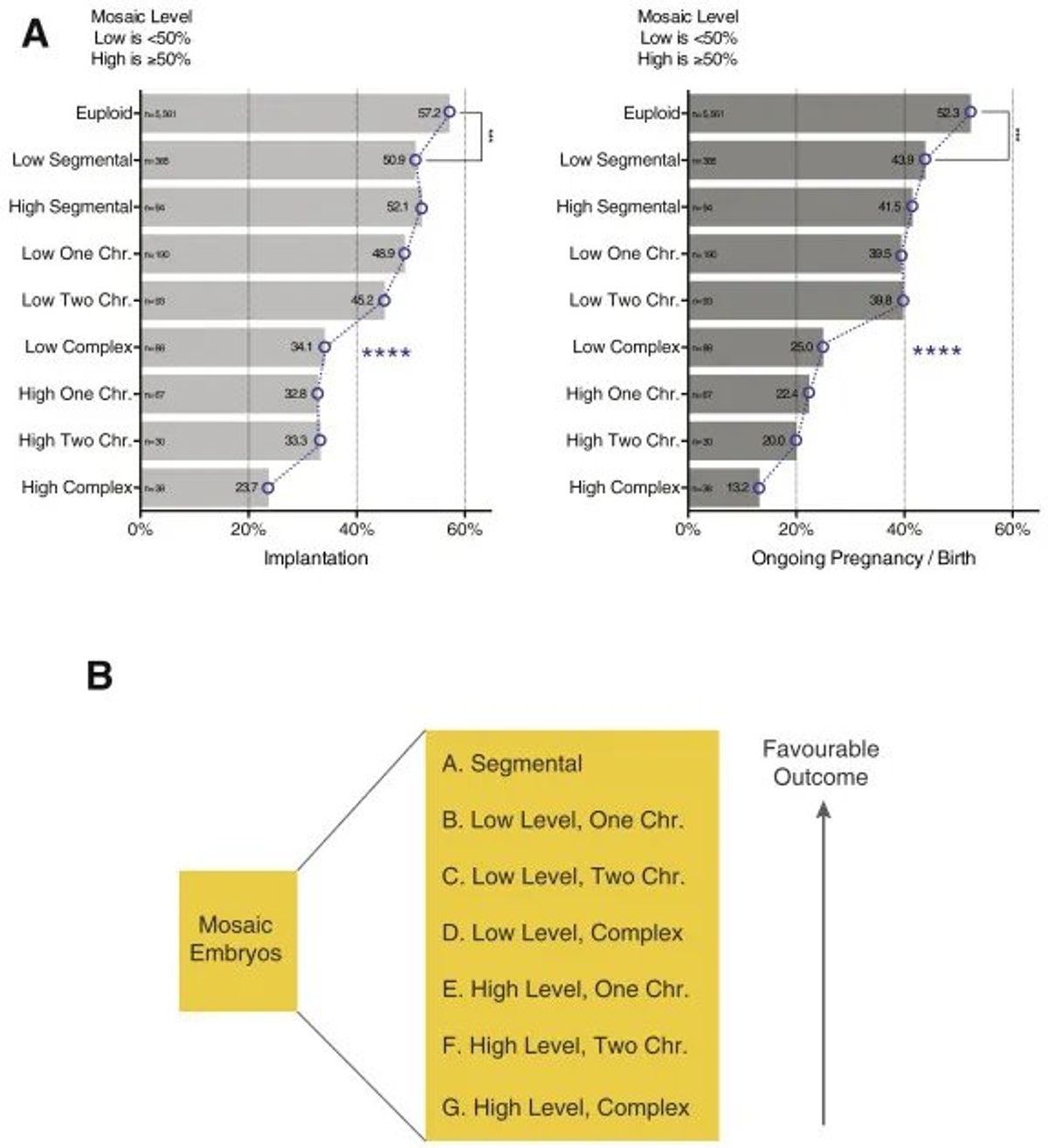
An embryo is considered mosaic when between 30% and 70 to 80% of the cell specimen tested are abnormal. Usually chromosome sets between 20 and 49% are considered low level mosaic, while 50 to 70/80% are considered high level mosaic. Like aneuploid embryos, mosaic chromosomes can be either trisomy (three copies) or monosomy (one copy), the main difference being that the percentage of cells impacted is lower.
A landmark study conducted in 2021, where 1,000 mosaic embryos were transferred, used this data to create a new hierarchy to help doctors help their patients select which order embryos should be transferred in to confer the greatest potential for live birth.
Understandably there is often a level of fear around potential chromosomal disorders that may result from the transfer of mosaic embryos, and different clinics have different levels of tolerance. However it should always be remembered that thousands upon thousands of untested embryos are transferred every day, many of which would be mosaic, and within the literature of known mosaic transfers, the occurrence of children born with mosaicism is around 1 in 1,000, about the same as you would have if you got pregnant naturally in your early thirties. NIPT testing at 10 to 13 weeks can help determine further risk for patients who wish to transfer mosaic embryos.
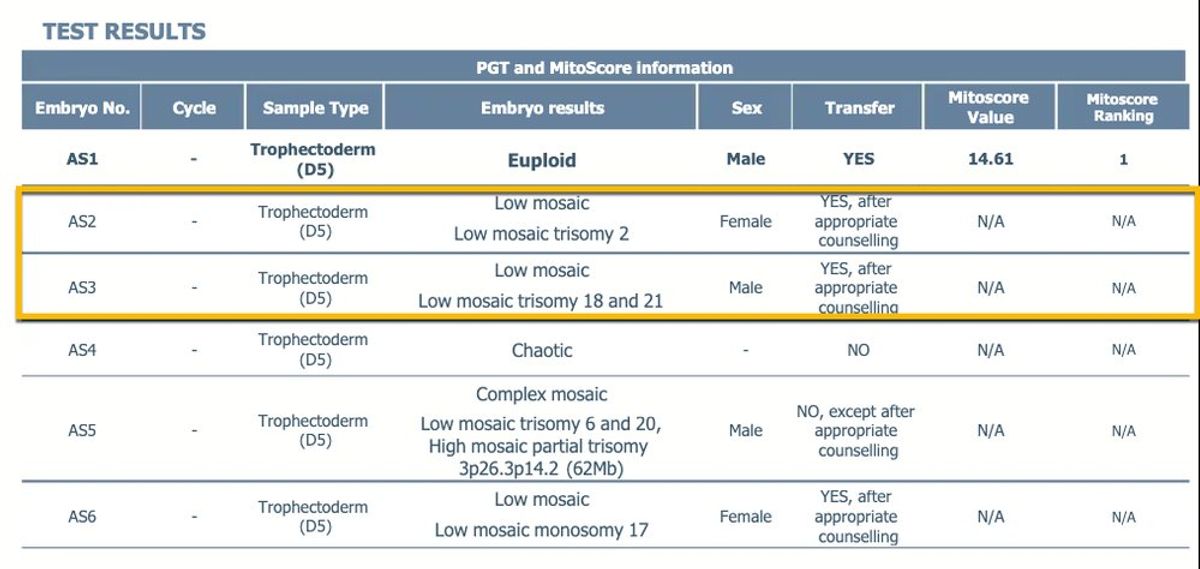
An aneuploid embryo is one where more than 70 or 80% (depending on the lab) of the placental cells tested had missing or additional chromosomes. In other words, they have abnormal cells which result in an abnormal number of chromosomes, the correct number being two. On PGT-A reports, aneuploids are often referred to as abnormal. Aneuploid embryos can also be triploid or monoploid, and they can also be polyploid, which in the context of IVF is used to mean more than triploid, i.e. more than three copies.
An important thing to note here is that a few less well known companies have shared with private patients that their cut-off rates for aneuploidy are much lower than others (this is not stated by the company publicly). This is a scenario where it is imperative that women know who the lab provider is, and even request original results so they can understand the exact percentage rather than the reported interpretation, because there are significant differences in live birth rates possible between a whole chromosome aneuploid as understood by the biggest labs (70 to 80%) and a mosaic embryo (20/30% to 70/80%).
While the 2021 Viotti study did not transfer any segmental aneuploids, recent research continues to emerge that these specific types (those embryos that have 70 to 80% or greater of a particular segment of a chromosome deleted or duplicated) have around a 20 to 24% chance of live birth. This live birth rate makes segmental aneuploids actually better options than complex mosaic embryos.
Unfortunately for many women over 40, they're not getting mosaics or even segmental aneuploids. The majority are getting whole chromosome aneuploids and often embryos with not just a single chromosome impacted, but multiple. Since 2020, four studies have looked at whole chromosome aneuploidy transfers using next generation sequencing, the tool used to complete preimplantation genetic testing. I personally reviewed these studies and calculated a total of 252 transfers of whole chromosome aneuploid embryos. Overall, there were 3 reported live births from all 252 transfers. No age breakdowns were provided, which means we don't necessarily know whether any of these live births were to women over 37.
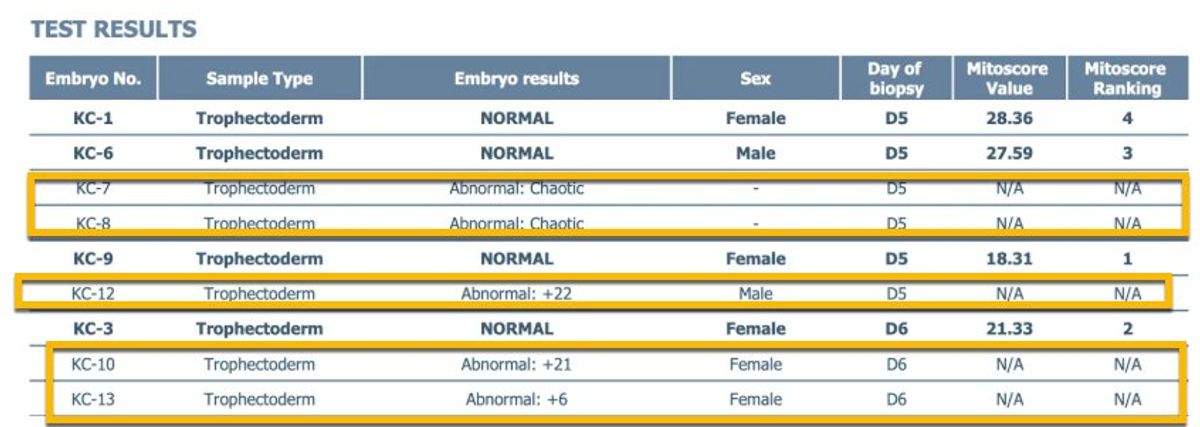
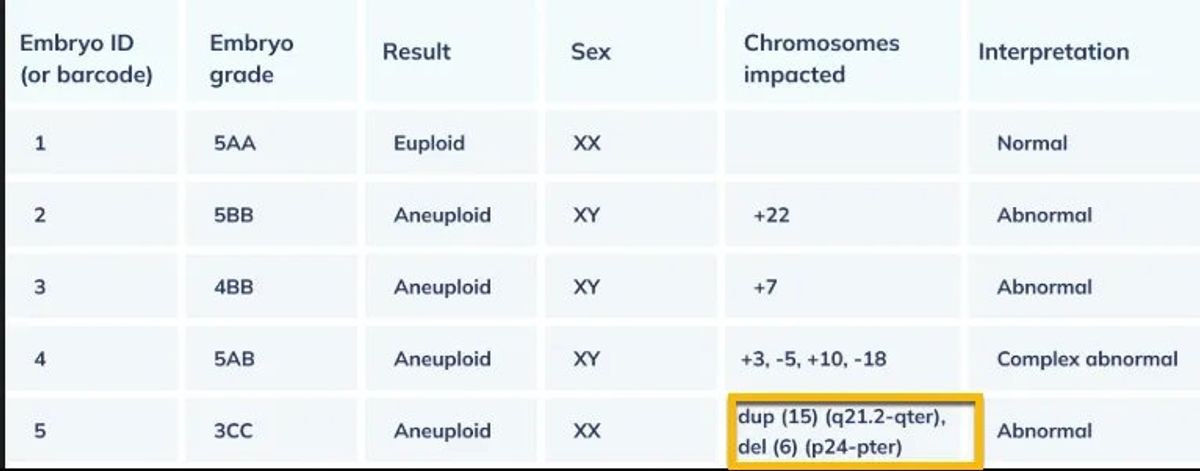
It is relatively well accepted that for the most part, once a euploid embryo is produced, there is a much more reasonable chance of a live birth. But ploidy status isn't the only determining factor of success. The number of days that an embryo takes to reach blastocyst stage (5, 6 or 7 days), embryo morphology (how it looks) and its expansion also contribute to the probability of implantation and live birth.
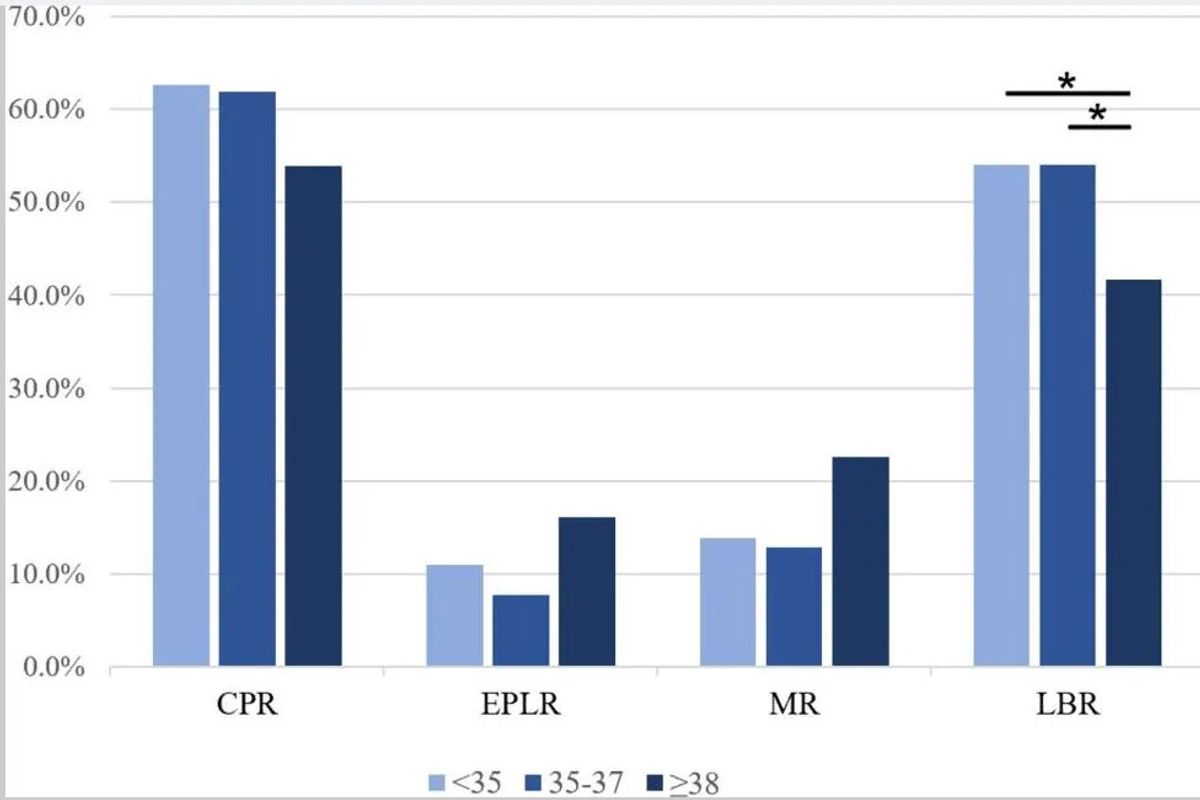
Even as recently as 2025, studies have been released showing ages 38+, while having a lower chance of live birth with a euploid, are still significantly better (40%) compared to overall averages. The most recent study to break this down found that the age of the oocyte was not in fact of concern (if a 45 year old woman happened to produce a euploid embryo and then transfer that embryo into a surrogate, then the likelihood of live birth would be the same as a euploid embryo produced by a younger woman). In contrast, a woman's age at transfer did begin to impact the success of euploid embryo transfers, especially from 43 onward:
Still, having a 40% chance of live birth at age 45+, when the general average would be around 3%, is incredible.
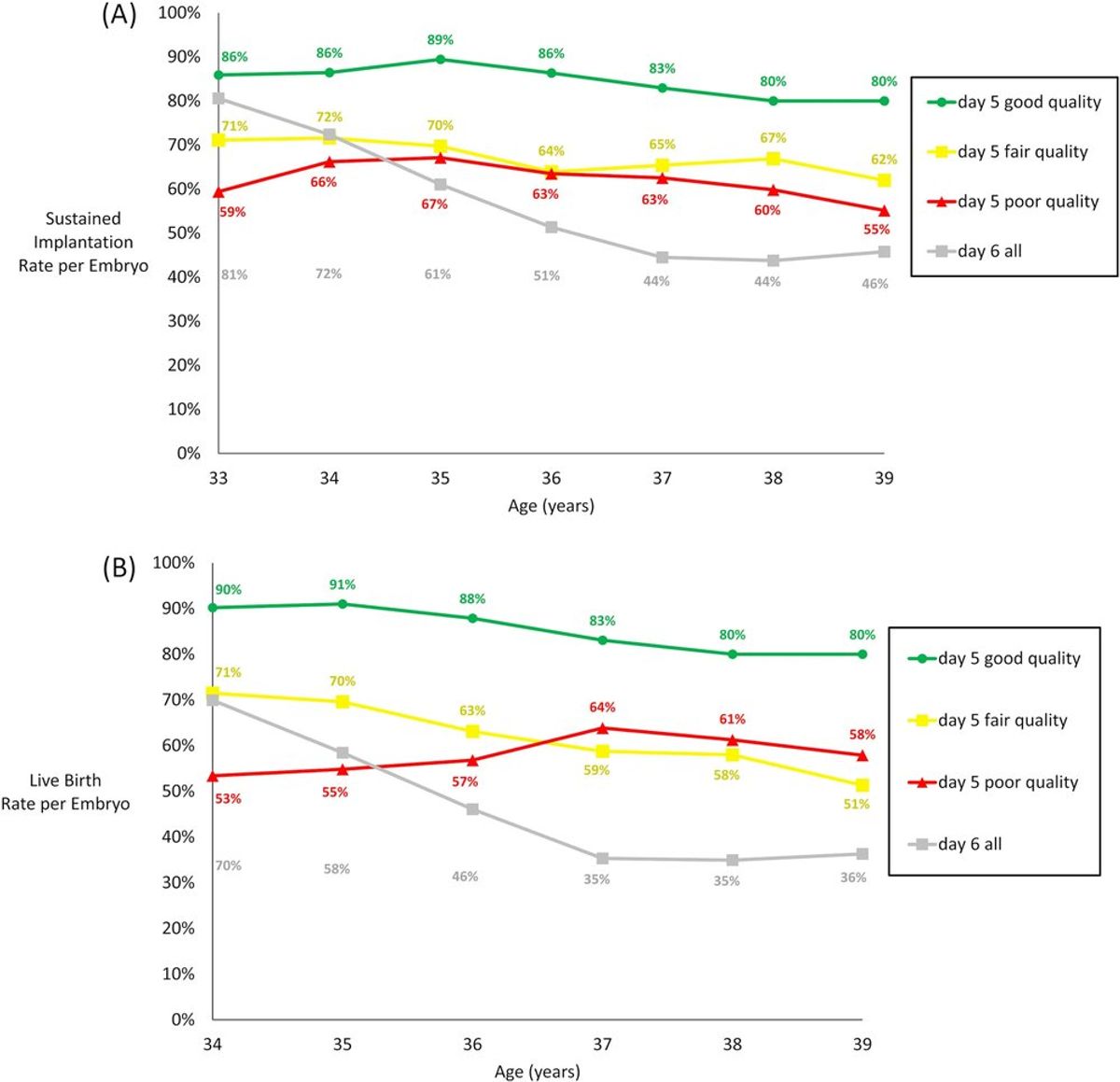
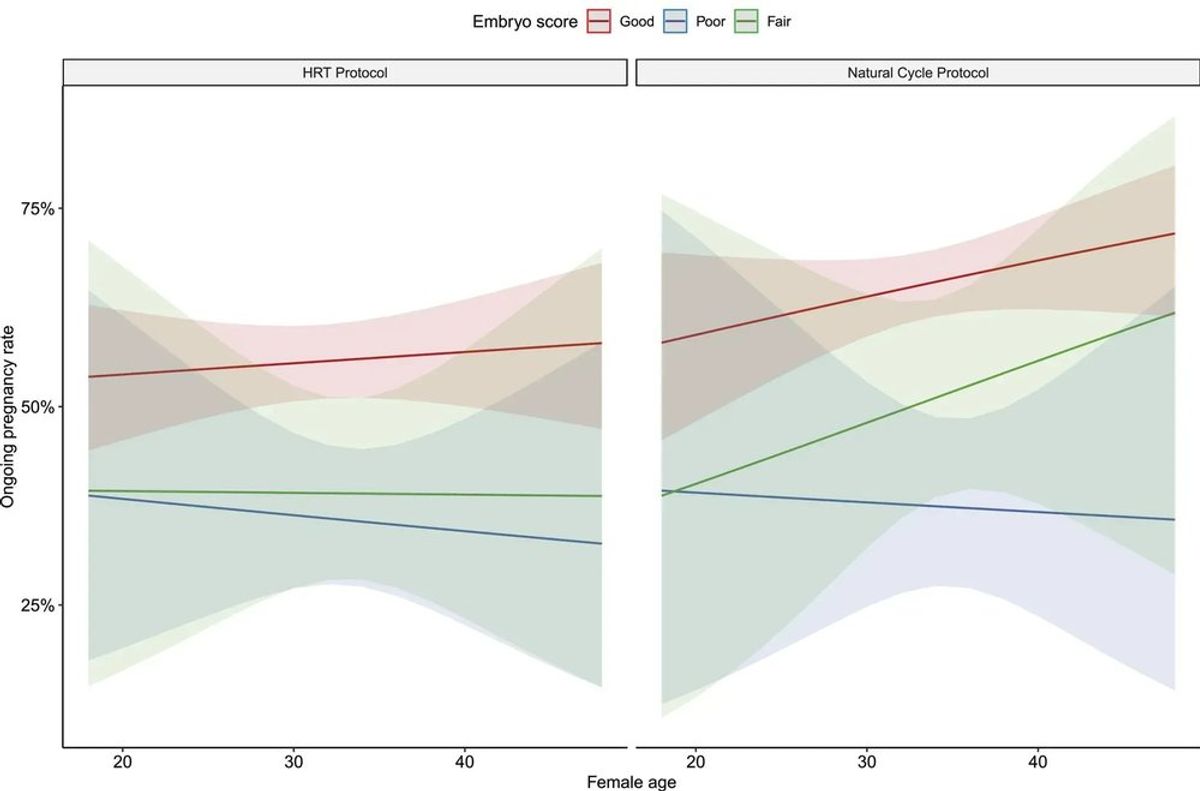
There is also new research emerging to show that live birth rates for euploid embryos can be further impacted by the type of endometrial preparation used (either natural or medicated). The common consensus being formed is that natural produces better live birth outcomes, but it wasn't until 2024 that a study appeared to show the same thing broken out for older cohorts. This large retrospective study examined 1,923 single euploid frozen embryo transfers matched by morphology, comparing natural cycle (NC-FET) to hormone replacement therapy (HRT-FET). For women who had a regular cycle, the natural cycle protocol produced significantly better ongoing pregnancy rates than the hormone replacement therapy protocol.
The truth is that unfortunately euploid embryos can still miscarry (approximately 13 to 15%, depending on the study), although at a much lower rate than mosaic and aneuploid embryos. Giving your body the best chance to carry a euploid embryo to term comes down to ensuring that your uterine environment is as optimal as it can possibly be.
According to research in the September 2021 edition of Fertility and Sterility, after euploid FET loss, most could be explained by abnormal endometrial factors (45%) and abnormal genome (12%), but 38% remained unexplained. My personal hypothesis (not verified by research) is that the more euploid embryos you have in your cohort, the more likely your euploid result is accurate, and therefore the less you have to worry about the 12% abnormal genome factor.
Another research study also found there are certain risk factors that can increase the possibility of you being in that 13 to 15%, specifically your BMI and your number of previous miscarriages. While the latter is not controllable, the former provides some level of control that can be asserted prior to transfer, especially with the increasing access to GLP-1 drugs.
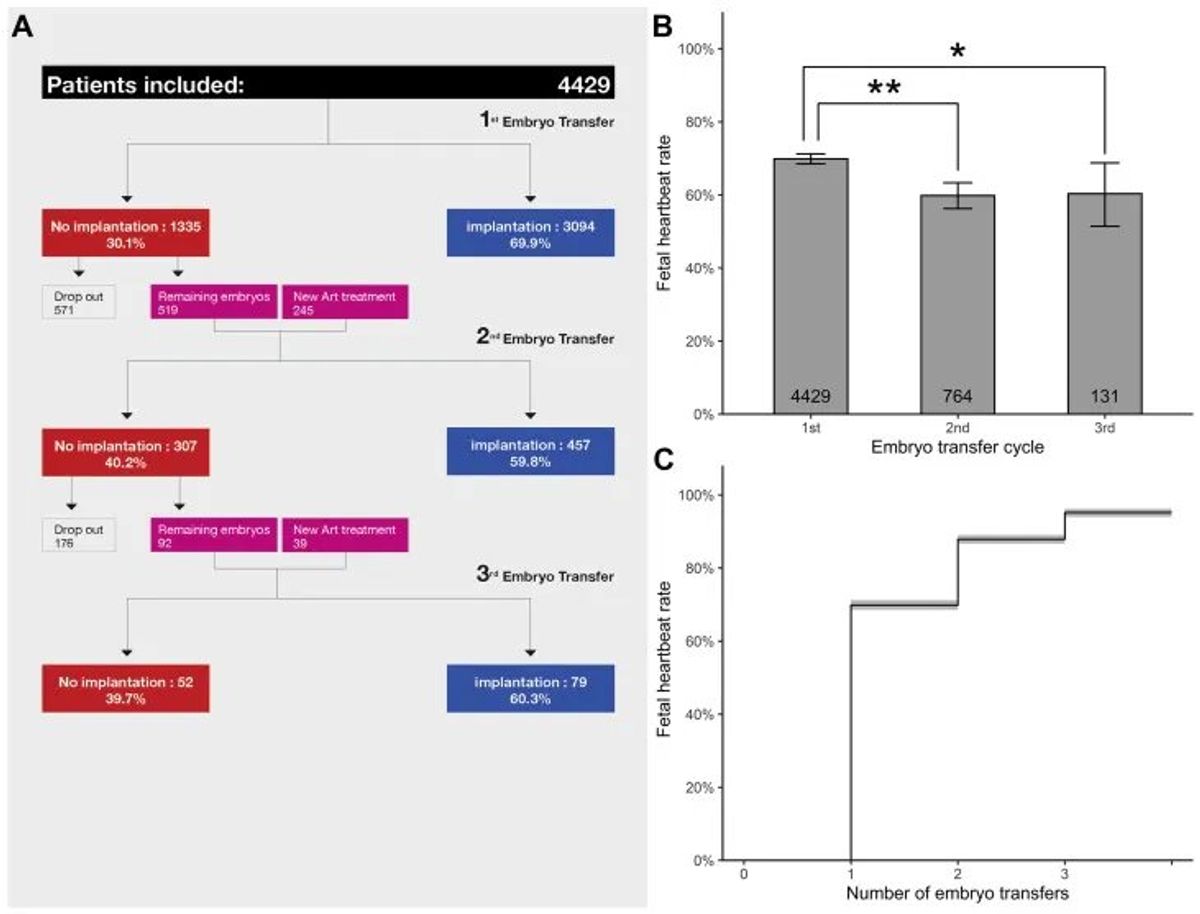
Some great research has been done in this area, especially since 2021. The first major study found that after three successive frozen embryo transfers of euploid embryos, the live birth rate was 92.6%.
A follow up study then tested the theory further, looking at over 123,000 patients with over 64,000 euploid blastocysts transferred, and found that the fourth and fifth euploid embryo transfer resulted in a 96.5 to 99.6% cumulative chance of live birth. In other words, if you can produce 3 to 5 euploid blastocysts, you are almost guaranteed to take home a live baby.
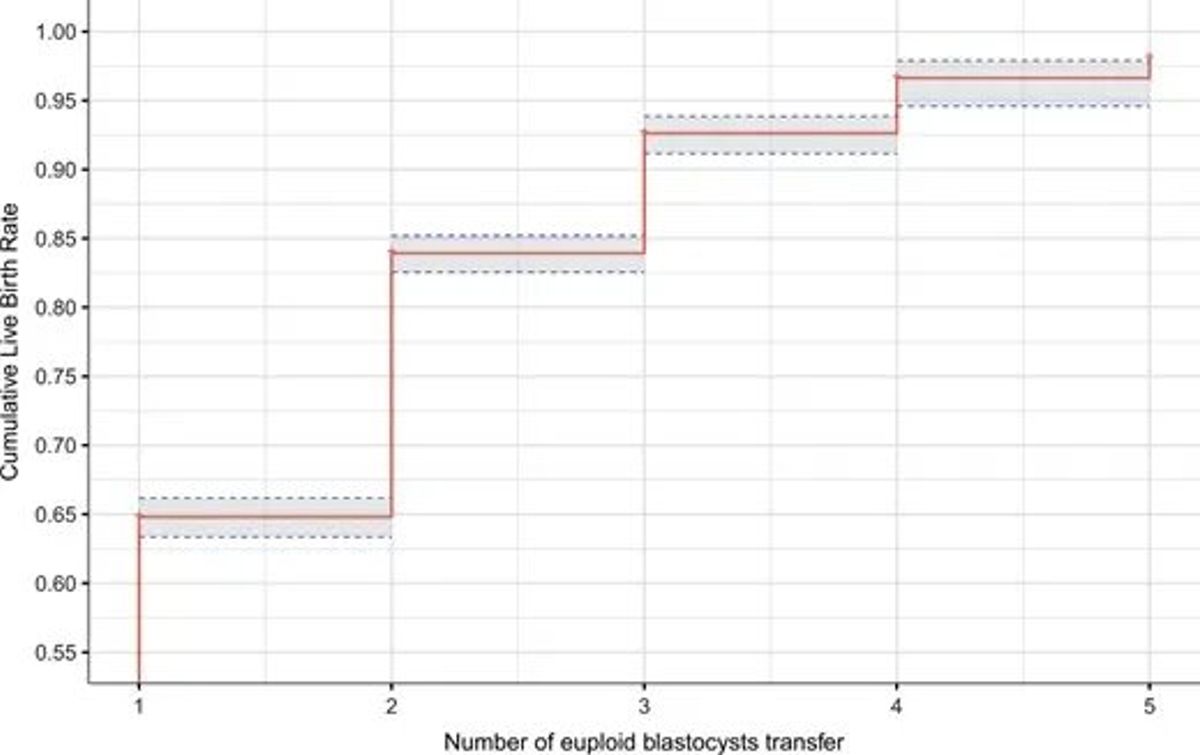
Of course, for women in the 38+ age bracket, sometimes the ability to produce a single blastocyst for testing is hard enough, let alone one euploid, let alone five. So while this is good news for those who can produce euploids, it does not ultimately change the outcome for older women unless they are actively working on methods to shift their euploidy rate through the use of experimental techniques and add-ons.
And for older women it would not be good enough to have even one euploid embryo fail, when in all likelihood this may be your only euploid. Euploids are so precious that every possible failure point for implantation and ongoing pregnancy should be investigated before transfer occurs.
This may be the end of this guide, but it's not the end of your story. Join the Better IVF Facebook group to start understanding the research, get access to information on everything to do before a euploid (or any) transfer and speak with peers who are on the same journey as you. And if you haven't already, click here to head back to the part of the article that has those research and success links.
▷ Research  ▷ Research
Paste a PGT-A result and it turns the lab percentages into clear live-birth odds, and shows how euploid rate moves with age.
Open the Decoder →
Written by
Founder of Better IVF and citizen researcher. Infertility diagnosis at 36, two children via IVF (first at 37 and second at 41). Leveraged research to shift euploidy rate at age 40 from average 43 year old to average 25-30 year old.