PICSI and HABSelect: why it matters more the older you are
Move through the ages and watch how PICSI shifts live-birth and miscarriage odds, drawn from the HABSelect trial.
PICSI and HABSelect: why it matters more the older you are
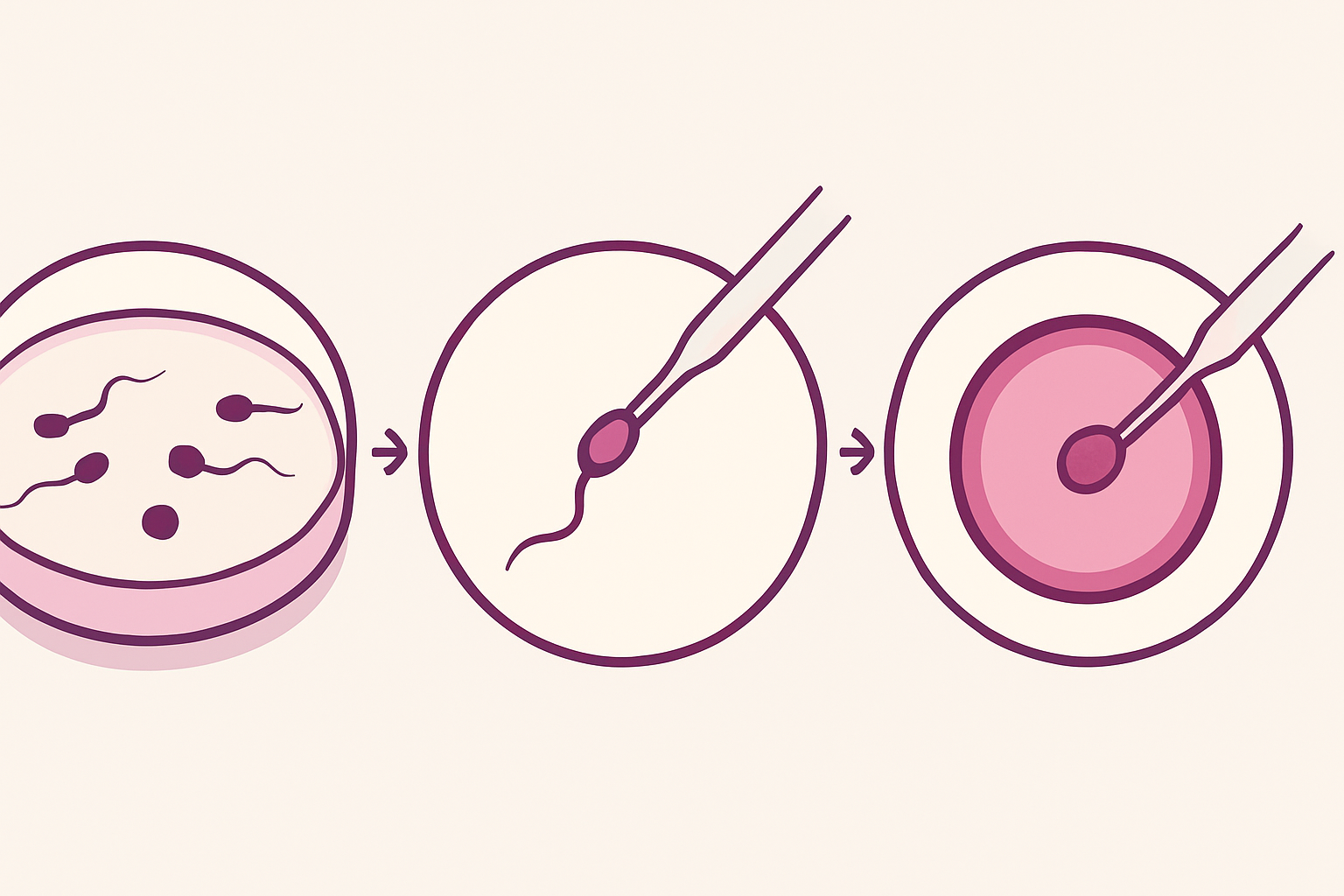
PICSI adds one step to IVF. Before the egg is injected, sperm are given a natural grip test, and only the ones that pass are used. Two studies matter here: the original 2019 HABSelect trial of 2,752 couples, and a 2022 mechanistic reanalysis that broke the same data down by age. We are going to start with the punchline, the age finding from the 2022 reanalysis, and then work backwards to show how the 2019 trial revealed it. Each chart is labelled with which study it comes from.
The older you are, the bigger PICSI's edge
2022 mechanistic reanalysisWhen the trial data was re-modelled by age in 2022, PICSI's advantage over standard ICSI grew steadily with age. Move the slider. (Illustrative of the modelled crossover, not raw per year trial rates.)
Work backwards: the odd thing in the 2019 trial
2019 HABSelect trialFirst, the clue. Of every 100 women in the trial, this many miscarried:
Now the full trial scoreboard. Tap each outcome:
How PICSI works, in three steps
What Prof Kirkman-Brown argues

Professor of Reproductive Biology, University of Birmingham; Science Lead, Birmingham Women's Fertility Centre; co-author of HABSelect. Profile
"The miscarriages are a reason not to do conventional ICSI anymore in certain groups of people. I'd argue the females that are over 35, the best thing now means that we could do PICSI."Prof. Jackson Kirkman-Brown, CooperSurgical webinar
"Wherever you can pick a sperm by PICSI, you should be doing PICSI. The data says choose that one, don't leave it to random chance."Prof. Jackson Kirkman-Brown